RNG Certification Standards: Safeguarding Fairness in Worldwide Casino Operations
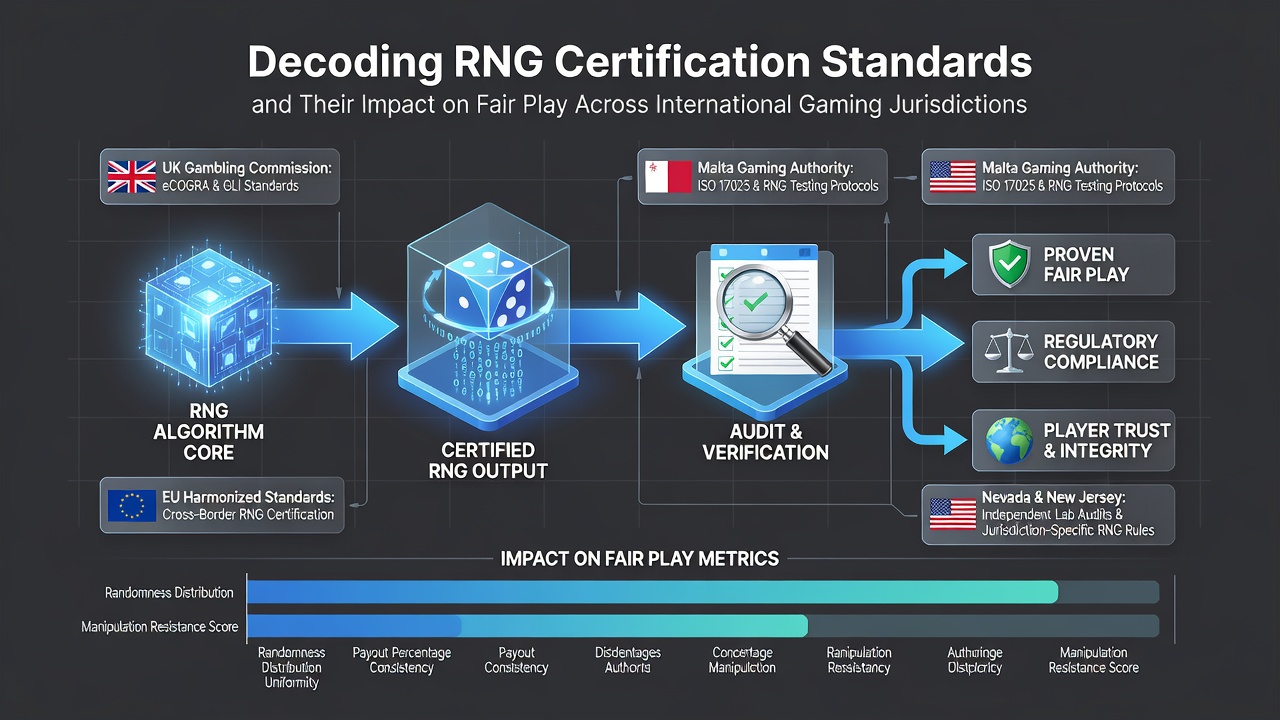
RNG certification standards form the backbone of fair play in regulated gaming markets because they verify that random number generators produce outcomes without predictable patterns or external influence. Gaming laboratories such as GLI and iTech Labs evaluate software algorithms through statistical testing suites that include diehard tests, chi-square analysis, and long-sequence simulations to confirm uniformity and independence. Operators submit their games for evaluation before launch, and certified titles receive seals that regulators require for market entry. Different jurisdictions adopt these standards with varying degrees of stringency and additional local requirements. In Nevada, the Gaming Control Board mandates that all electronic gaming devices undergo RNG evaluation by approved independent labs before approval, and ongoing audits ensure continued compliance throughout the device's operational life. Australian states follow a similar path through the National Standard for Gaming Machines, which incorporates RNG criteria alongside return-to-player calculations and game integrity checks.
Core Testing Protocols Across Regions
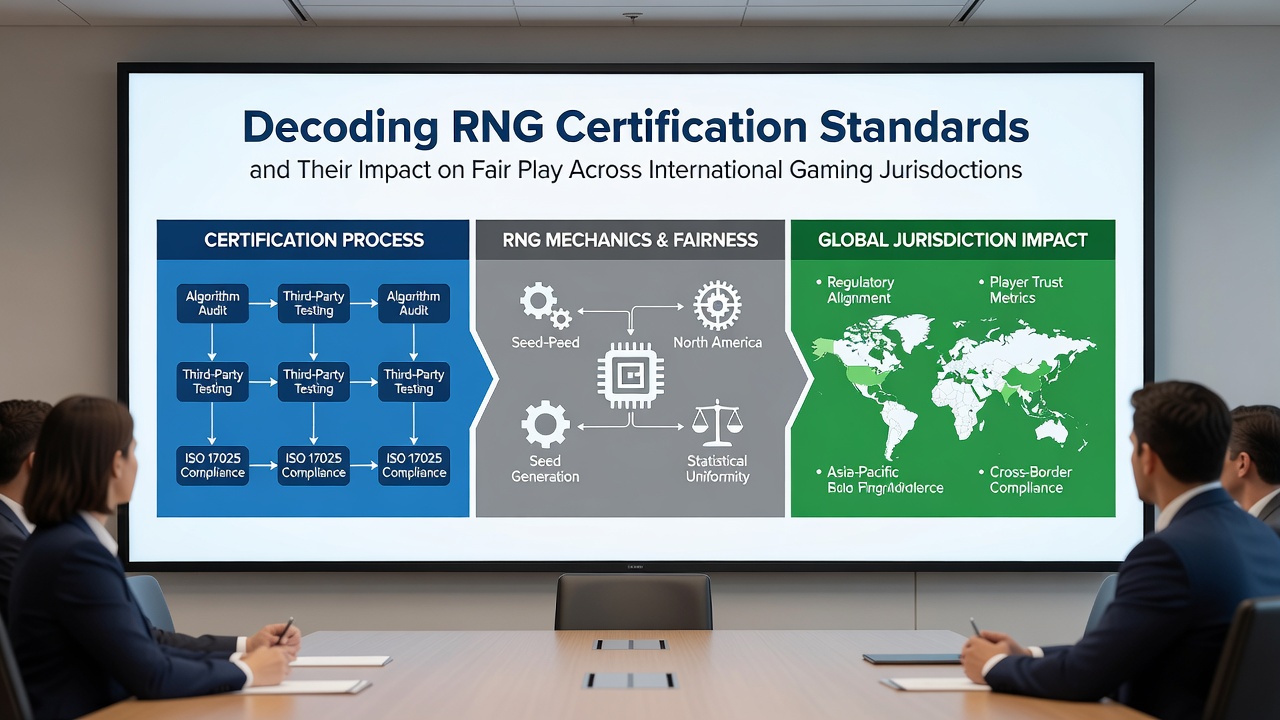
Certification bodies apply consistent methodologies yet adapt them to regional rules. Tests typically examine minimum sequence lengths of one million outcomes, check for bias across multiple seeds, and verify that game mechanics like bonus triggers remain independent of prior results. Malta's regulatory framework, administered through the Malta Gaming Authority, requires RNG reports from accredited labs while also demanding source code reviews that trace how the algorithm integrates with payout tables and jackpot systems. Canada's provincial regulators, including those in Ontario and British Columbia, align their technical standards with GLI-11 guidelines and add provisions for remote game servers that handle multi-jurisdictional traffic. These rules ensure that players in different time zones experience equivalent randomness properties even when games connect through shared platforms.
Impact on Operator Practices and Player Protections
Certified RNG systems directly influence how operators structure game libraries and manage backend infrastructure. Providers must maintain version control documentation that links every deployed build to its original certification report, and any code changes trigger re-testing cycles. Data from industry reports indicate that jurisdictions enforcing annual re-certification see fewer complaints related to outcome predictability compared with regions that rely solely on initial approval. In August 2026 several European and North American regulators plan to introduce updated statistical thresholds that account for emerging quantum-resistant algorithms, prompting software developers to revise their RNG cores accordingly. These updates aim to future-proof systems against potential advances in computational power that could challenge current entropy sources.
Cross-Border Recognition and Mutual Acceptance
Mutual recognition agreements between certain regulators reduce duplication while preserving local oversight. For instance, the Multi-State Lottery Association in the United States accepts GLI certifications from member states, allowing operators to deploy the same RNG module across multiple markets after a single comprehensive review. European authorities have explored similar harmonization through the European Gaming Standards Association, yet differences in tax structures and player protection addenda still require jurisdiction-specific documentation. Observers note that transparent publication of certification summaries on regulator websites builds public confidence because players can verify that a particular title carries current approval. Academic studies published in gaming technology journals have examined correlations between certification rigor and reported dispute rates, finding measurable declines in markets that publish detailed test parameters.
Emerging Challenges in Certification Maintenance
Live dealer studios and skill-based games introduce hybrid RNG elements that combine algorithmic randomness with human decision inputs, requiring new testing frameworks. Regulators in New Jersey and Singapore have issued guidance documents that outline how mixed systems must isolate RNG components for separate evaluation. Certification labs respond by developing modular test protocols that separate random elements from deterministic rules while still confirming overall fairness metrics. Third-party auditors conduct periodic site inspections to confirm that deployed RNG instances match certified versions and that entropy sources such as hardware security modules remain operational. Failures in these checks lead to immediate suspension of affected titles until remediation and re-testing occur.
Conclusion
RNG certification standards continue to evolve alongside technological advances and expanding international markets. Jurisdictions that maintain rigorous, regularly updated requirements create environments where operators and players operate under consistent fairness assurances. As more regions adopt digital-first gaming models, the role of independent laboratories in bridging regulatory gaps becomes increasingly central to sustained industry credibility.